IGNOU BCHET-147- Solved Assignment
Are you looking to download a PDF soft copy of the Solved Assignment BCHET 147 Organometallics, Bioinorganic Chemistry is the right place for you. This particular Assignment references the syllabus chosen for the subject of Hindi, English, for the Jul 25 – Jan 26, Jul 24 – Jan 25 session. The code for the assignment is BCHET-147 and it is often used by students who are enrolled in the BSC (Honours), IGNOU CBCS Solved Assignments Degree. Once students have paid for the Assignment, they can Instantly Download to their PC, Laptop or Mobile Devices in soft copy as a PDF format. After studying the contents of this Assignment, students will have a better grasp of the subject and will be able to prepare for their upcoming tests.
PLEASE MATCH YOUR ASSIGNMENT QUESTIONS ACCORDING TO YOUR SESSION
IGNOU BCHET-147 (January 2026 – December 2026) Assignment Questions
PART A: ORGANOMETALLICS, BIOINORGANIC CHEMISTRY
1. What is the chromyl chloride test? Give suitable equations.
2. Give the structure of dimethyl beryllium


5. How can formation of nitrosyl complexes be formed from carbonyl complexes with the help of nitric oxide? Give three suitable equations to show this.


8. Which metal ion is essential for the process of blood coagulation? Explain the mechanism by which it facilitates clot formation? Give the different ways by which cadmium affects the human body.
9. With the help of a suitable diagram explain the Na+ -K+ pump. Show how the sodium-potassium pump moves toward an equilibrium state with the relative concentrations.
10. With the help of a suitable diagram, explain the mechanism of oxygen binding in hemoglobin and discuss the structural changes that occur upon formation of oxyhemoglobin.
PART B: POLYNUCLEAR HYDROCARBONS AND UV, IR SPECTROSCOPY
11. How will you prepare 5-hexen-2-one from ethyl 3-oxobutanoate. Give the reactions involved and the reagents used in the reaction.
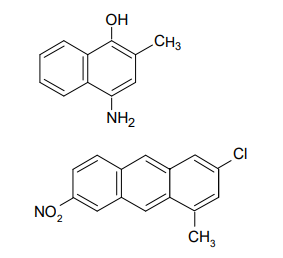
12. (a) Give IUPAC names of the following compounds.

(b) Is napthalene an aromatic compound? Explain.
13. Give the reaction involved and the reagents used for the commercial preparation of pyrrole.
14. Give the resonance structures for the intermediate in the reaction where electrophile E + attacks on 2-position of pyridine.
15. What are the differences between Bathochromic shift and Hypsochromic shift?

17. What sort of shift may be observed in bromobenzene, (C6H5Br)?

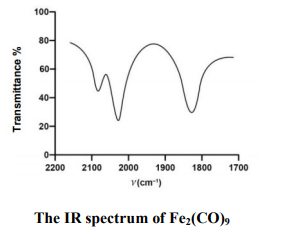
19. With the help of suitable diagrams explain how the IR spectrum is depicted in the absorption mode and the transmittance mode.
20. The IR spectrum of a sample of cyclohexanol is recorded. Which major absorption bands you would be looking for in the spectrum
IGNOU BCHET-147 (January 2025 – December 2025) Assignment Questions
IGNOU BCHET-147 ASSIGNMENTS DETAILS
| University | : | IGNOU (Indira Gandhi National Open University) | |
| Title | : | Organometallics, Bioinorganic Chemistry, Polynuclear Hyderocarbons and UV, IR Spectroscopy | |
| Language(s) | : | English, Hindi | |
| Code | : | BCHET-147 | |
| Degree | : | BSCG | |
| Subject | : | Chemistry | |
| Course | : | Discipline Specific Electives (DSE) | |
| Author | : | ignouedumart.com Panel | |
| Publisher | : | Distance Gyan Publishing House Pvt. Ltd. |
Call us: +91 9466323363




Reviews
There are no reviews yet.